[Product Introduction]
Brand: Jienengrui
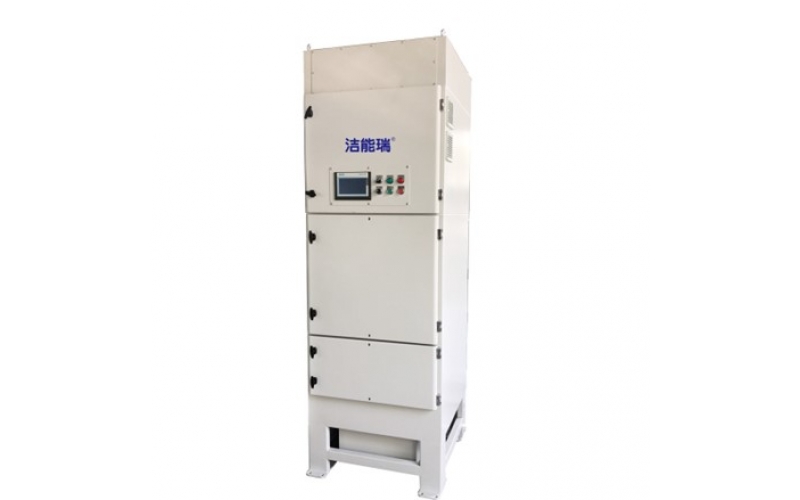
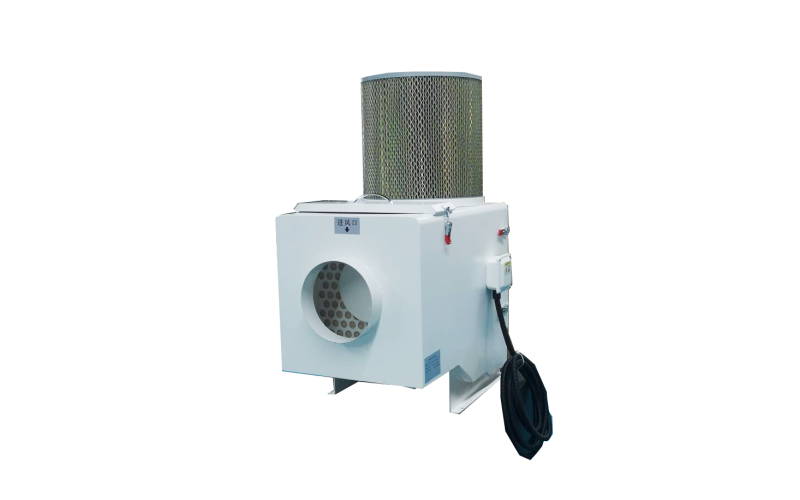
Name: DMF Series Polishing and Dust Removal Equipment
Model: DMF750E
Power supply: 380VAC, 50Hz
【 technical parameter 】
Product Parameter | Unit | DMF750E |
power | kW | 7.5 |
voltage | V - Hz | 380 - 50/60 |
capacity | l | 80 |
total filtration area | m² | 120 |
Filter precision | μm | 0.1-0.3 |
Filter count | PC | 6 |
gas flow | m³/h | 7000 |
total head | kPa | 3 |
noise | dB | 78 |
Product height | mm | 3200 |
Each explosion-proof dust collector is designed with a capacity of 7,000 cubic meters per hour and a power output of 7.5 kW. It features six anti-static filter cartridges measuring 325 mm in diameter and 1,200 mm in length, utilizing a rotary-wing spray system for filtration.
The equipment uses two-stage filtration, with the first stage having a filtration precision of 0.3 microns and a filtration efficiency of 99.5%, ensuring the discharge concentration is ≤5mg/m³.
The secondary filtration achieves 0.1-micron precision with 99.5% efficiency, ensuring emissions below 0.5mg/m³ and guaranteeing the return air is entirely free of harmful substances.
Each explosion-proof dust collector is equipped with six anti-static filter cores. The rotating wing spray filter ensures more uniform and thorough cleaning, with minimal noise that does not interfere with workers' operations.
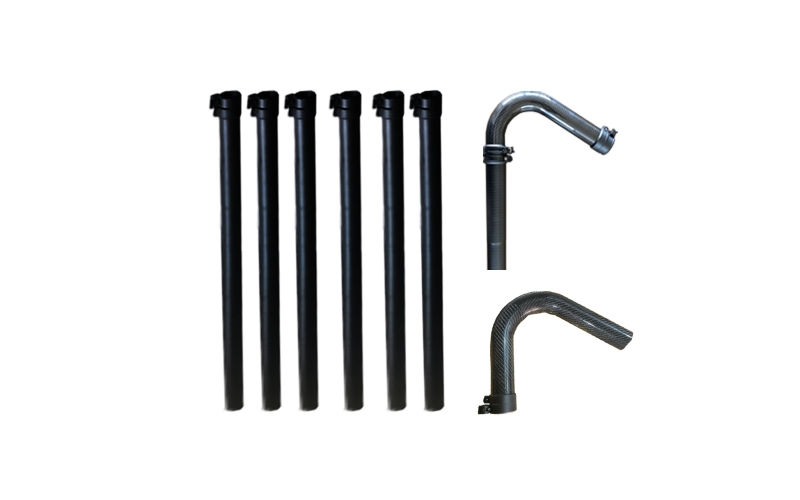
The optimized airflow duct design achieves five key benefits: 1. Prevents dust overflow during reverse blowing; 2. Minimizes reverse blowing noise; 3. Guides airflow downward into the filter element, enhancing dust collection efficiency; 4. Extends filter element lifespan; 5. As shown in the diagram, dust flows vertically into the dust collector, while the pulsed air stream carries residual dust directly to the lower collection drawer, effectively resolving the issue of incomplete dust removal during pulse cleaning.
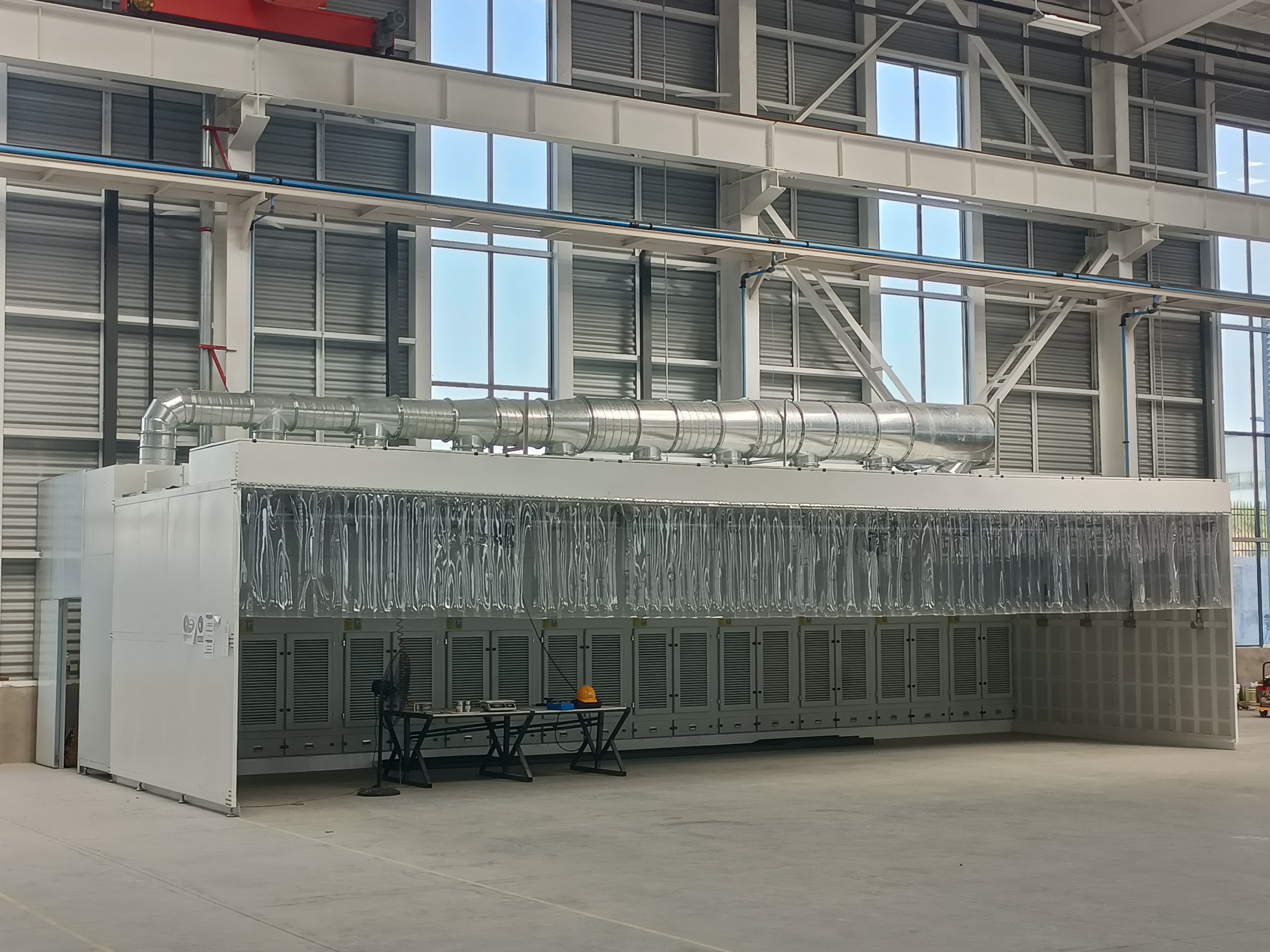
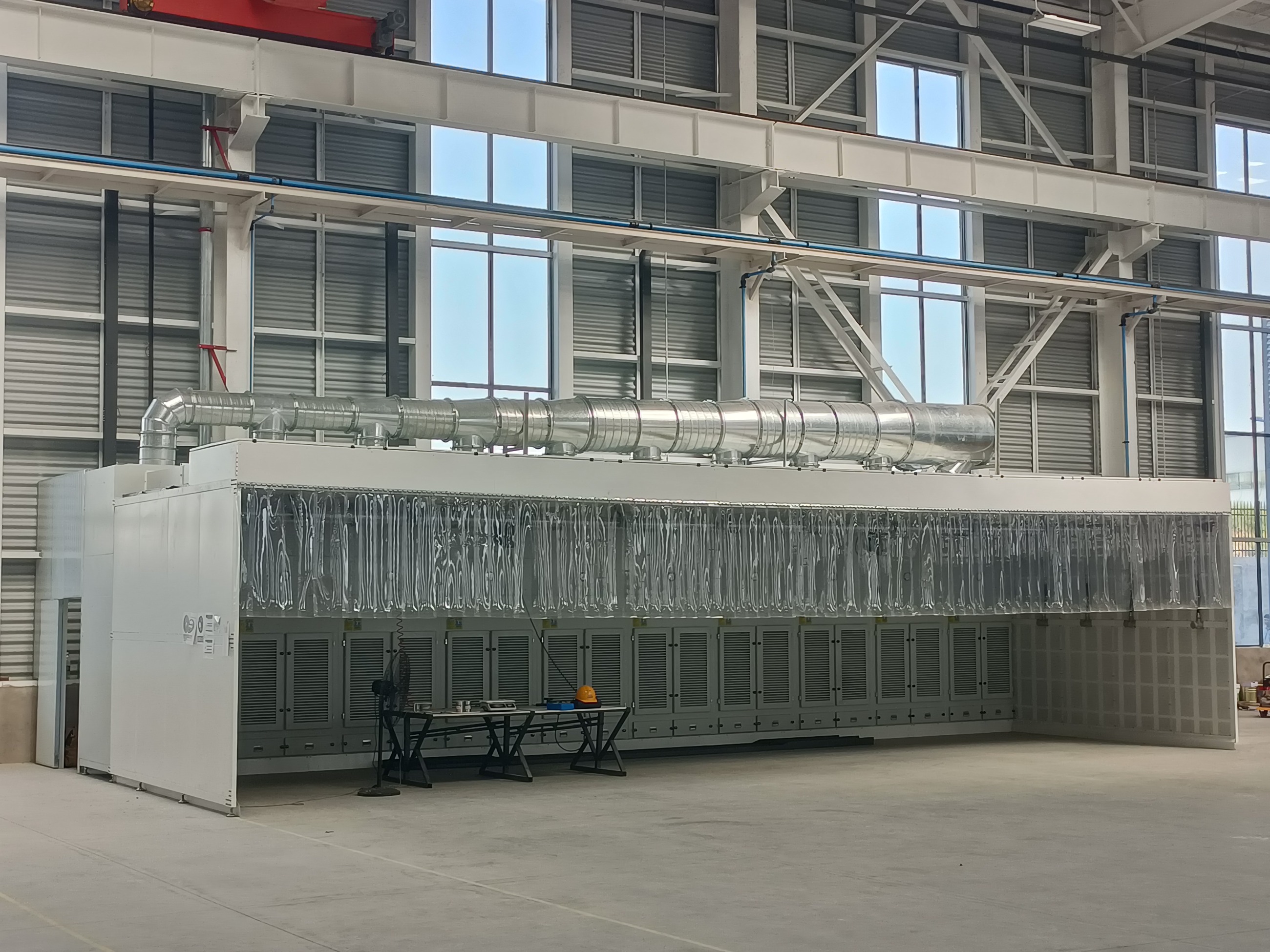
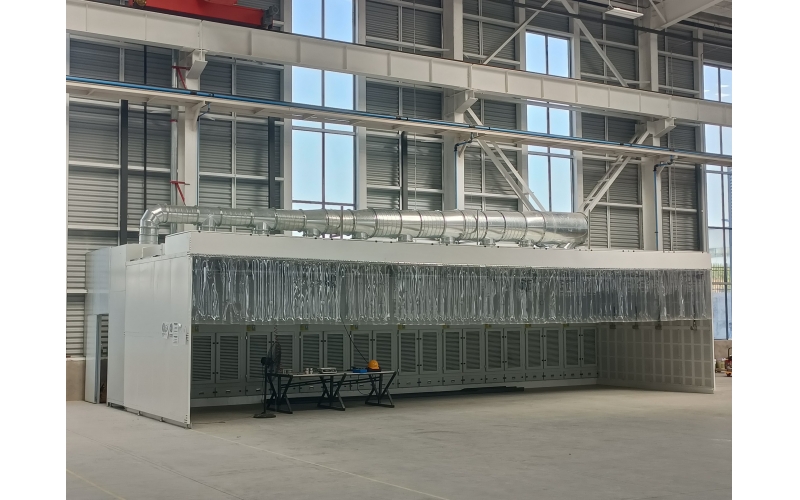
The grinding workbench should be arranged rationally, with small items processed on a single table and larger ones on two or more tables. Each machine's return air is drawn back into the room via ducts from one side of the workshop to achieve internal circulation.